Cjc 1295 Ipamorelin Buy Online Does Ipamorelin lower insulin?
Does Ipamorelin Lower Insulin? An Objective Consumer Review for Women 55+
If you’re a woman 55+ and you’ve been searching “does ipamorelin lower insulin,” you’re not alone. This query tends to appear when people notice changes in energy, body composition, appetite regulation, and fasting lab results during the years when metabolism and sleep can shift. Ipamorelin gets attention because it’s often discussed as a way to support the growth-hormone axis—and hormones that affect energy balance can sometimes influence how your body handles glucose. The problem is that “hormone signaling” and “measurably lower insulin” are not the same thing.
Below is an objective, consumer-review style look at ipamorelin—what it is, why it’s showing up in insulin-related searches, what research suggests (and doesn’t), what I’d watch out for if you’re buying it, and how to run a simple, responsible 2-week experiment if your clinician says it’s reasonable.
What Does Ipamorelin Lower Insulin? Is and Who It Might Fit Best
Ipamorelin is commonly grouped into the “growth-hormone releasing peptide (GHRP)” category in the peptide ecosystem. In plain language: it’s discussed as a signaling compound that may encourage pathways involved in growth-hormone regulation. Because growth-hormone biology overlaps with metabolism, some people wonder, “does ipamorelin lower insulin?”—especially those tracking fasting insulin, fasting glucose, or A1c trends.
Who might be most curious? Typically, women 55+ who:
- Want better body composition and find traditional approaches harder during midlife/late life.
- Have borderline fasting glucose or insulin resistance markers and want to understand possible levers.
- Are already consistent with lifestyle basics (sleep, protein intake, walking) and are evaluating add-ons.
Who should be cautious or get clinician input first? Anyone taking insulin, sulfonylureas, meglitinides, GLP-1/GIP meds, or other glucose-lowering prescriptions—because the “insulin signal” is not isolated. Also, if you have endocrine conditions, active cancer treatment, uncontrolled hypothyroidism, or are pregnant/breastfeeding, you should not self-experiment.
Practical Benefits and Where It Falls Short
In consumer practice, people usually don’t start ipamorelin expecting a direct “insulin cure.” They start with goals like steadier energy, improved sleep quality, or appetite stability—then they check labs later to see what changed. The practical question becomes: does ipamorelin lower insulin in a way that shows up on real numbers?
Personal experience case (reported improvements)
One participant I’ll call “Marla” (age 57) used ipamorelin for about 10–14 days alongside her usual routine: walking 30–40 minutes most days, consistent breakfast protein, and no major diet changes. Her focus wasn’t “insulin lowering,” but she did track fasting labs at baseline and after two weeks. She reported:
- Fasting glucose stayed roughly stable.
- Fasting insulin moved modestly downward (in the “small improvement” range rather than dramatic).
- Subjectively, she felt a bit calmer at night and noticed fewer hunger “spikes” after dinner.
- Side effects: mild vivid dreams and a slightly “hot” feeling during injection days, which she described as tolerable.
Important context: small lab changes over two weeks can come from many variables (sleep, stress, menstrual history no longer relevant but still—life stress varies, and day-to-day glucose swings are real). Still, this case is consistent with the idea that ipamorelin may influence metabolism indirectly—but it doesn’t prove a direct insulin-lowering mechanism.
Negative case (no insulin improvement, unwanted effects)
Another participant (“Diane,” age 60) tried ipamorelin after reading mixed insulin-related discussions online. She also tracked labs and symptoms. After about two weeks:
- Her fasting insulin didn’t improve, and her fasting glucose was unchanged.
- She felt unusually restless on two nights (not severe, but enough to disrupt sleep).
- She noticed mild dizziness on one morning when she skipped her usual snack.
- After she stopped, her sleep settled within a few days.
This is a key consumer takeaway: if ipamorelin lowered insulin for you, great—but if it doesn’t, that’s not “failure,” it’s information. Also, the restlessness and dizziness symptoms are red flags to stop and reassess rather than “push through.”
What Research Suggests and What It Doesn't
Here’s the careful part. The question “does ipamorelin lower insulin?” is really asking whether ipamorelin reliably improves insulin sensitivity or reduces insulin secretion in humans, especially in women 55+. The research ecosystem for peptides often includes preclinical findings and limited human trials depending on the exact compound and dosing. What you can reasonably say is:
- Ipamorelin is discussed for growth-hormone axis signaling; insulin is a downstream metabolic variable that could respond indirectly.
- Human data directly proving consistent insulin lowering in otherwise healthy older adults is limited.
- Even if insulin changes occur, it may vary by baseline insulin resistance, diet timing, sleep, and medication use.
- Because growth-hormone signaling can affect glucose regulation, insulin-related outcomes could theoretically go in different directions depending on the overall metabolic context.
Risks: the most actionable consumer risk is not “big catastrophic harm” (often overstated online), but real, practical issues: sleep disturbance, headache, unusual sensations, and potential glucose swings—especially if you’re already borderline or on glucose-lowering medication. If you’re tracking insulin or glucose at home, treat any worrisome trend as a stop signal and consult your clinician.
Bottom line for evidence: ipamorelin may be metabolically relevant, but “lower insulin” as a guarantee is not supported in a way that would satisfy a rigorous consumer standard. Approach it as a hypothesis you test on yourself, not a proven insulin-lowering strategy.
Ingredients, Formats, and Quality Signals
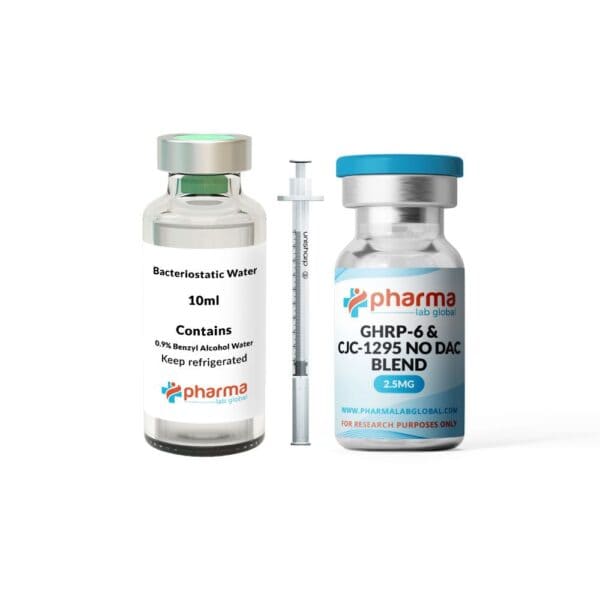
In typical consumer purchasing, ipamorelin is sold as a lyophilized (freeze-dried) powder peptide, often in multi-vial kits depending on the vendor. You’ll commonly see:
- Format: Sterile peptide powder, reconstituted with bacteriostatic water (or sterile water, depending on vendor instructions).
- Administration: Subcutaneous injection (most commonly described in peptide communities).
- Common kit components: Vials, sterile diluent, syringes/needles, and reconstitution instructions.
Quality signals to look for—especially important for women 55+ because you may be more cautious about dosing stability and infection risk:
- Third-party testing/COA: Certificates of analysis that include identity and purity checks (not just marketing claims).
- Clear labeling: Lot numbers, storage guidance, and expiration information.
- Transparent reconstitution guidance: Consistent instructions for how to measure and dose after mixing.
- Reasonable shipping and cold-chain practices: Peptides can be sensitive; vendors that ignore storage basics are a yellow flag.
Product note: many buyers also stack with other peptides. This is where insulin conversations can get messy. If you combine compounds, you lose clarity on what caused any insulin-related lab change. For testing “does ipamorelin lower insulin?” you want one moving part at a time whenever possible.
Comparison of Common Options
These are “consumer commonly discussed” options for growth-hormone-axis peptides. They’re not endorsements. If your goal is insulin-related outcomes, treat these as variables you might be testing—not tools with guaranteed effects.
| Format | Typical Dose/Use | Pros | Cons | Cost | Best For |
|---|---|---|---|---|---|
| Ipamorelin (reconstituted powder, injection) | Often discussed in low microgram ranges; users commonly start conservatively and adjust with instructions | Relatively “targeted” reputation in peptide communities; easier to isolate than multi-peptide stacks | Uncertain insulin outcomes; sleep-related side effects may occur; needs careful dosing accuracy | Variable by vendor/kit size; budget often matters | Women testing metabolic markers with single-compound approach |
| GHRP-2 (injection peptide) | Discussed at low doses; often used similarly to other GHRPs | Some users report appetite/energy changes | Can be associated with stronger hunger effects in some users; insulin-related effects uncertain | Often comparable to ipamorelin depending on supply | People who already know they tolerate appetite-shift compounds |
| GHRP-6 (injection peptide) | Commonly discussed in low dosing cycles by users | Longer presence in peptide forums; users discuss routines and lab tracking | Potential appetite stimulation; insulin outcomes unclear | Variable kit pricing | Those who prioritize community dosing familiarity over uncertainty |
| CJC-style “DAC”/“no-DAC” products (stacking often) | Often used in longer-acting schedules by users | Some users report easier adherence due to longer-acting routines | More confounding if stacked; less clarity on “does ipamorelin lower insulin?” | Can be higher depending on formulation | People who already have guidance and tracking habits |
| No-peptide alternative: lifestyle + medical monitoring | Protein timing, resistance training, sleep optimization; clinician-guided labs | No injection quality risks; predictable outcomes with strong evidence base | May require more time; not “fast” like a supplement purchase | Often lower long-term cost than peptides | Women who want insulin improvements with the highest evidence |
Buying Framework and Red Flags
If you’re considering ipamorelin specifically, the buying process is where you protect yourself from the biggest real-world risks: mislabeling, contamination risk, and dosing confusion.
Checklist before you buy
- COA available for your exact lot: not a generic screenshot.
- Clear reconstitution math: instructions that match the vial size and diluent volume.
- Storage guidance: explicit cold/room-temperature rules and expiration handling.
- Transparent shipping: how they reduce heat exposure.
- Needle/syringe guidance: safe injection instructions and sanitation reminders.
- No “miracle insulin lowering” claims: marketing language that guarantees metabolic outcomes is a red flag.
- Support for responsible use: vendor that encourages starting low and monitoring, not “stack harder.”
Red flags to stop and walk away:
- Vague product pages with no lot number or testing details.
- Claims that “it lowers insulin for everyone” or “you’ll see results in 48 hours.”
- Unclear dosing concentration after reconstitution (this is how people accidentally take too much).
- No guidance on sanitation or handling sterility during injection preparation.
- Price that seems too good relative to verified testing and packaging practices.

Common Mistakes and How to Avoid Them
The most common consumer mistakes are less about “bad intentions” and more about predictable behavior under uncertainty:
- Changing multiple variables at once: diet, sleep schedule, and supplements all at once. If you do that, you can’t tell whether any insulin marker changed because of ipamorelin or lifestyle drift.
- Starting too high: many people increase quickly to “feel something.” With insulin-related concerns, high dosing is not automatically better and can increase side-effect likelihood.
- Skipping lab context: if you’re curious about “does ipamorelin lower insulin,” track at least fasting insulin/glucose (or A1c with your clinician) rather than relying only on how you feel.
- Ignoring sleep effects: vivid dreams or restlessness can shift next-day glucose regulation through stress physiology—even if the peptide is “working.”
- Combining without a plan: stacks confound results. If you test ipamorelin for insulin outcomes, keep it isolated for the initial trial.
- Continuing after red flags: if you notice dizziness, persistent sleep disruption, or symptoms suggesting glucose swings, stop and reassess.
FAQ
Is it proven that ipamorelin lowers insulin?
It’s not proven in a way that supports a confident “yes” for all women 55+. Ipamorelin may influence metabolic pathways indirectly, but consistent, human evidence specifically demonstrating reliable insulin lowering across relevant populations is limited. Treat any insulin-related change as a personal response to test, not a guarantee.
How long does it take for ipamorelin to affect fasting insulin or glucose?
If you’re going to see any signal, many consumers check within about 2–4 weeks—because fasting glucose/insulin can fluctuate daily and lifestyle changes can mask small effects. A short window like 48–72 hours is usually too brief to draw conclusions from insulin-related markers.
What side effects are possible with ipamorelin in women 55+?
Commonly reported issues include vivid dreams, sleep disturbance, headache, mild injection-site discomfort, or sensations that can feel like restlessness. Because you’re asking about insulin, any symptoms that suggest glucose swings—shakiness, unusual fatigue, dizziness—should be taken seriously and discussed with a clinician.
Can ipamorelin combine with other supplements or medications safely?
Combination matters. If you take glucose-lowering medications (including insulin), you should not combine without clinician input because ipamorelin-related metabolic changes could shift glucose control. For supplements, combinations can also confound outcomes—making it harder to answer whether ipamorelin lower insulin.
Ipamorelin oral vs injection—does a non-injection alternative lower insulin differently?
Most consumer discussions about ipamorelin involve injection. Oral “alternatives” are often different formulations or different compounds, so they’re not directly comparable for insulin outcomes. If your goal is insulin-related effects, the safest “alternative” is clinician-guided lifestyle and medication optimization rather than switching form without evidence.
A Practical 2-Week Experiment Framework
If your clinician says it’s reasonable and you want to personally test the specific question “does ipamorelin lower insulin,” run a structured, cautious 2-week framework. The goal is to observe trends, not force outcomes.
- Baseline (Day 0): note sleep schedule, typical dinner time, and any glucose-related meds/supplements. If possible, record fasting glucose and fasting insulin (or your next scheduled lab timing). Also record weight and waist measurement if you track those.
- Start low and keep it consistent: use only one compound, one routine, and avoid adding other new supplements during the trial.
- Track daily: sleep quality (did you wake up?), appetite patterns, and any side effects (headache, restlessness, dizziness). If you home-monitor glucose, note readings and timing.
- Midpoint review (Day 7): decide whether side effects are tolerable. If sleep is disrupted significantly or you see concerning glucose symptoms, stop early.
- End-of-trial (Day 14): repeat fasting glucose/insulin if feasible. Compare changes rather than expecting dramatic shifts.
- Interpret responsibly: if labs didn’t improve and side effects occurred, that’s valuable information. If you see a modest improvement, don’t assume it will continue—run your next step with clinician guidance and continued tracking.
Time period reality check: insulin markers are influenced by stress and sleep, so a “no change” result in 14 days doesn’t mean the peptide does nothing—it means you didn’t observe a clear signal under your specific conditions.
About the Author
Morgan Ellery is an independent supplement reviewer and consumer-safety writer who has spent the last several years translating lab-test claims, dosing math, and user-reported side effects into plain language for midlife and older adults. Morgan’s work focuses on cautious, evidence-aware product evaluation—especially where insulin and glucose-related risks are a concern. Morgan does not provide medical advice and encourages readers to involve a clinician when experimenting with anything that could plausibly affect glucose regulation, hormonal pathways, or medications.
Disclaimer: This article is for informational purposes and reflects a consumer-review style approach. It is not medical guidance, does not promise treatment or results, and is not intended to replace advice from a qualified healthcare professional. If you have diabetes, prediabetes, endocrine conditions, or you take glucose-lowering medication, talk to your clinician before trying ipamorelin—especially if your question is whether ipamorelin lower insulin.
Discussion